My garage door spring just broke — what should I do?
First, stop using the door and do not try to open it with the opener. A door with a broken spring is essentially dead weight (150–200+ lbs) held only by the opener, which is not built to lift that load — forcing it can burn out the motor or snap a cable. Park your car elsewhere if it's trapped inside, keep kids and pets away from the door, and call us. Spring replacement involves hundreds of pounds of stored tension and should only be done with the proper winding bars and training.
The motor makes noise but the door won't move — what's wrong?
This is one of the most common calls we get. If you hear the opener humming or grinding but the door stays put, the opener's gear or drive is usually stripped or jammed — or the door is disconnected from the carriage. Do not keep pressing the button; repeated attempts overheat the motor and can cause further damage. Unplug the opener and call us so we can inspect the gear, trolley and the door's balance.
One of my safety sensors isn't working — can I fix it?
Sometimes a sensor is simply knocked out of alignment — if both little LEDs are lit solid and the door works, you're fine. But if one sensor's light is off or flickering even after you've lined them up, it's usually not just alignment — there may be a fault in the sensor's wire (pinched, chewed by rodents, or corroded near the bracket). Wiggling the wire as a test can make it worse. We trace and repair the sensor cable so the door's safety reverse works correctly.
A cable came off / is hanging loose — should I touch it?
No — do not touch a loose or detached lift cable. Those cables work together with the springs and can be under extreme tension. A cable that's off the drum can suddenly whip or snap, which can injure you and damage the door or your car. Keep the door where it is, keep everyone clear, and let a technician release the tension safely and re-spool or replace the cable.
Why do garage doors near the water need a special spring?
If you're near the bay, the ocean or the river, the salt in the air corrodes standard springs much faster — they rust, lose strength and snap years earlier than inland doors. In coastal areas we install galvanized / coated, corrosion-resistant high-cycle springs and treat the hardware so it lasts. It's the single biggest reason shore-area doors fail early.
Does the cold and heat really affect my garage door?
Yes. Steel springs contract in the cold and lose cycles faster, so most springs break on the first hard cold snap of winter. Big temperature swings between summer heat and winter cold stress the metal, thicken the lubricant, and make brittle springs let go. Seasonal lubrication and a properly rated spring for our climate go a long way to prevent surprise failures.
How fast can you get here?
We offer same-day and emergency service across South Jersey, the Jersey Shore, Philadelphia-area PA and northern Delaware. Most spring, cable and opener repairs are completed in a single visit. Call or text (508) 745-9084 and we'll give you an honest arrival window.
How long does a garage door spring last?
Springs are rated in cycles (one up + one down = one cycle). A standard spring is about 10,000 cycles — roughly 7 years of average use — but coastal salt air and harsh winters cut that down. We install high-cycle springs (up to 25,000+) so you replace them far less often.
Why won't my garage door close all the way?
If the door starts down and reverses, or stops short, the usual suspects are blocked or misaligned safety sensors, a worn travel/limit setting on the opener, or an obstruction in the track. Check that nothing is in the doorway and that both sensor lights are steady — if it still won't close, the sensor wiring or opener limits likely need adjustment, and we can sort that out fast.
Why is my garage door so loud / making noise?
Loud grinding, popping or rattling usually points to worn metal rollers, loose hardware, or springs that need lubrication — and a sudden loud bang is very often a spring that just snapped. Noise is your door asking for a tune-up before something breaks. We lubricate, tighten, replace worn rollers and balance the door so it runs quiet and safe.
Why does a garage door pulley need to be replaced?
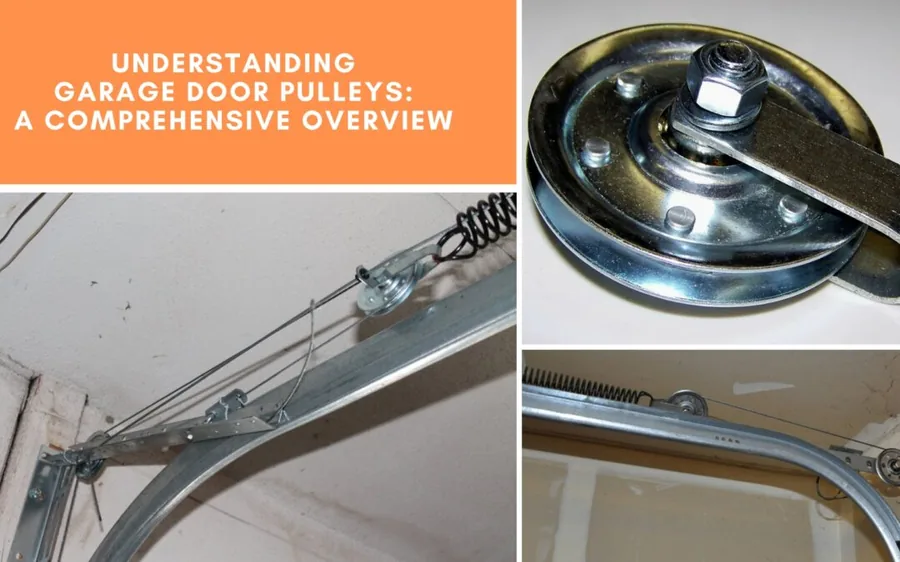
The pulley is what the lift cable rides over as the door moves. Over time the pulley wears out and can
seize up (stop spinning). When that happens, the cable no longer rolls over it — it drags against a stuck wheel, and the friction
saws through the cable until it frays and snaps. That's why we replace a worn pulley before it takes the cable with it. If you see a pulley that won't spin freely or a cable starting to fray near it, it's time to have it looked at.
My cable came off the drum / looks loose — what does that mean?
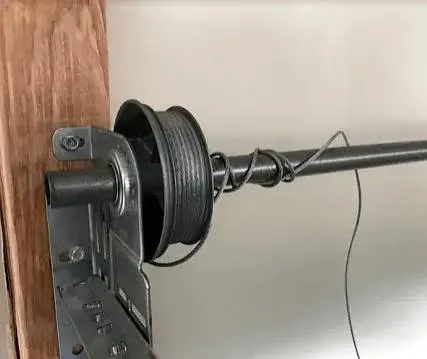
When the cable goes slack or jumps off the drum like this, it almost always means
the spring is broken, or the spring has lost its tension and is no longer holding the door's weight properly. With the spring weak or broken, the cable goes loose and unwinds off the drum. Don't operate the door in this state — the cable can whip or the door can drop. We re-set the spring tension (or replace the spring), re-spool the cable on the drum, and rebalance the door.